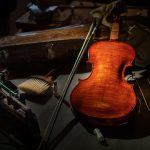
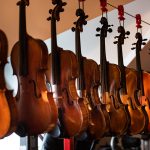
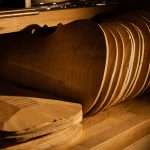



Wood is an integral element of nature, has a wide range of uses, and is an indisputably valuable material which is essential for instrument making. Due to its physical structure, varying levels of hardness, and unique acoustic properties, wood will forever be a top priority in the music industry worldwide.
In addition to the selection of the appropriate wood for the making of a musical instrument, the shaping and processing abilities, knowledge infrastructure, and experience of the master who crafts it with his/her soul is also directly proportional to its quality.

Describing the wood utilized in crafting the instrument as “resonant wood” would be more accurate. Working on resonant wood can be a challenging undertaking due to its varying compositions. The primary factor for wooden materials used in musical instruments is their acoustic properties, with physical characteristics like color and pattern being evaluated secondarily.
There is no established standard for controlling the properties of resonance due to its diverse and complex nature. However, numerous research studies and publications are available. To have good resonance, a wood material must meet several criteria, such as being lightweight, having uniform fibers and annual rings, and lacking defects such as cracks, knots, and fiber rotation. Trees with fine and dense fibers receive sound vibrations well and transmit them quickly. The annual ring width should be 0.5 – 1 mm wide in spruce wood used in violin making. An example of specific weight for spruce would be that its air-dry specific gravity should range from 0.37 to 0.43 g/cm2. The optimum humidity level is between 5 to 7%.

Treating resonant wood with bacteria or various chemicals is recommended in the literature. Moreover, relevant literature indicates that the wood of an Amati violin was found to contain high levels of calcium. High levels of calcium suggests that the wood had been soaked in calcium rich water for a long time. Several attempts have been made to soak wood in water containing calcium and magnesium, but consistency was not maintained.
There are differing opinions on drying periods of the wood. According to violin-makers, it is generally believed that a minimum of 50 years or even a longer period is necessary. A drying period of 10 years in dry climates generally produces accurate results. In short, to obtain satisfactory results from wood, it is necessary to dry it for an extended period in a natural environment where while being exposed to wind from all directions.
To achieve the desired resonance, the primary woods used in violin making are Maple, Spruce, and Ebony.
Acer pseudoplatanus L. – Mountain Maple
This highly valuable species, which is publicly known as “kelebek” (butterfly) or “Janjanlı” (Glitzy), shows a corrugated structure and has attractive and aesthetic parts. It is especially used in parts of the violin such as the bottom plate, sideboard and neck.
Acer campestre L. – Hedge maple
It is one of the most popular species. It has a light pink and white color.
Picea L. – Spruce
It is slightly soft and has dense fibers. It is frequently used in the upper plate of musical instruments called the soundboard. It transmits sound vibrations rapidly.
Picea orientalis L. Carr – East spruce
This type of spruce, which is abundant in Türkiye, is frequently used in the making of musical instruments. Spruce has a sound transmission speed of 5000 M/s. The specific weight of this spruce species is 0.41 g/cm3 when dry, and 0.44 g/cm3 when air-dried.
Ebony
This high-density, high-value, and difficult to process tree does not grow in Türkiye and can be found growing in the forests of India, various African countries, and Brazil. The wood’s hardness and density make it suitable for use in parts such as keyboards, door thresholds, and furniture legs.

June 22, 1993, Trabzon, Uluer VARDALOĞLU
