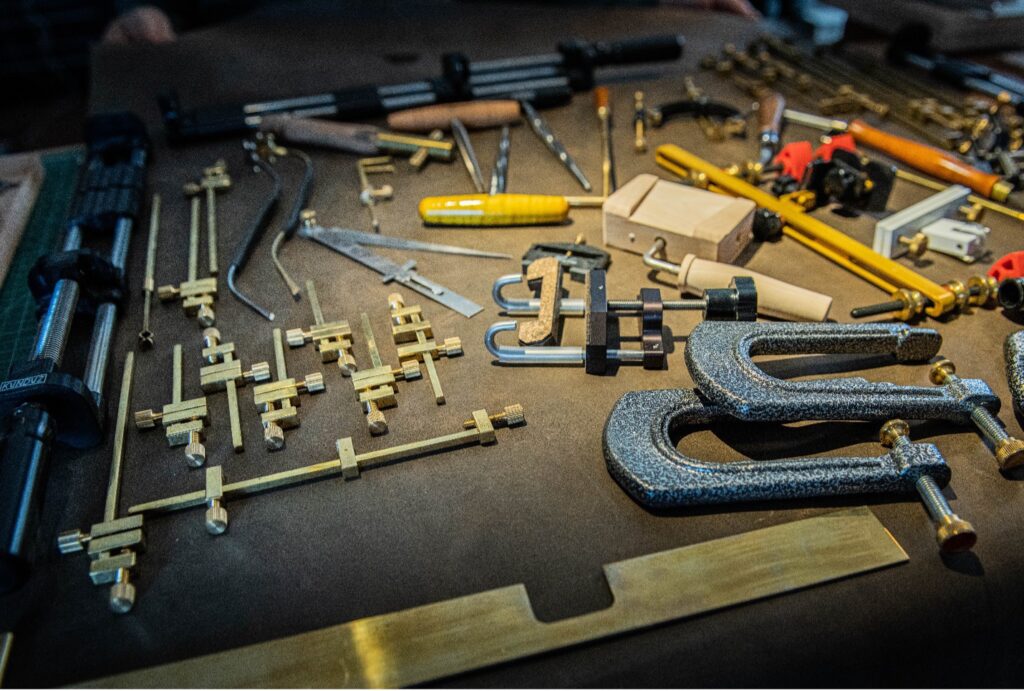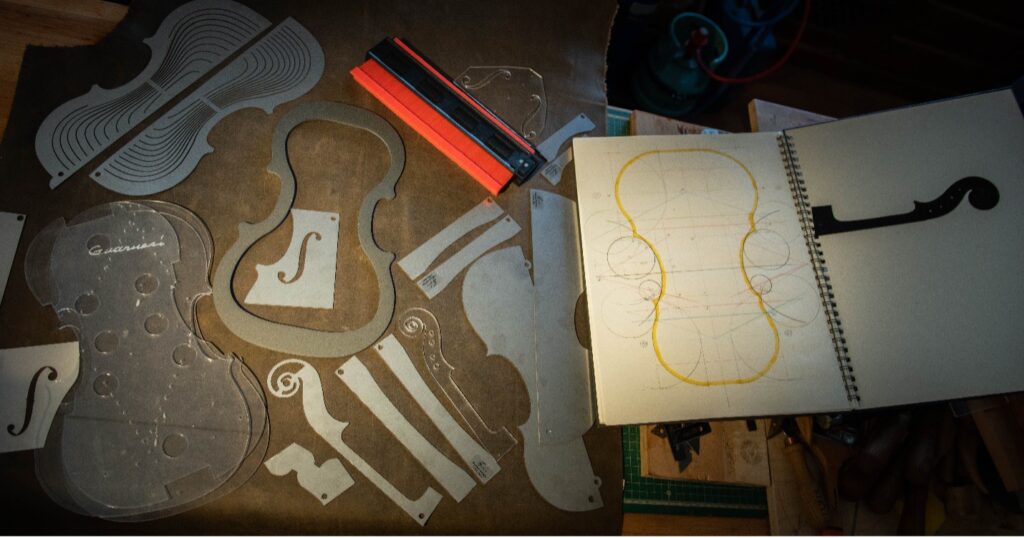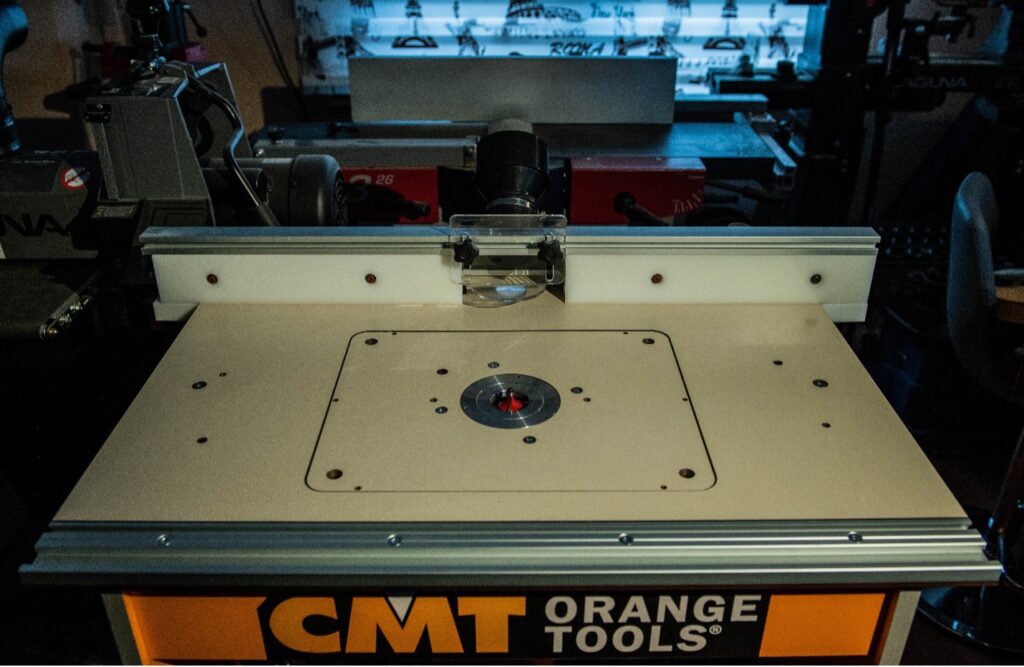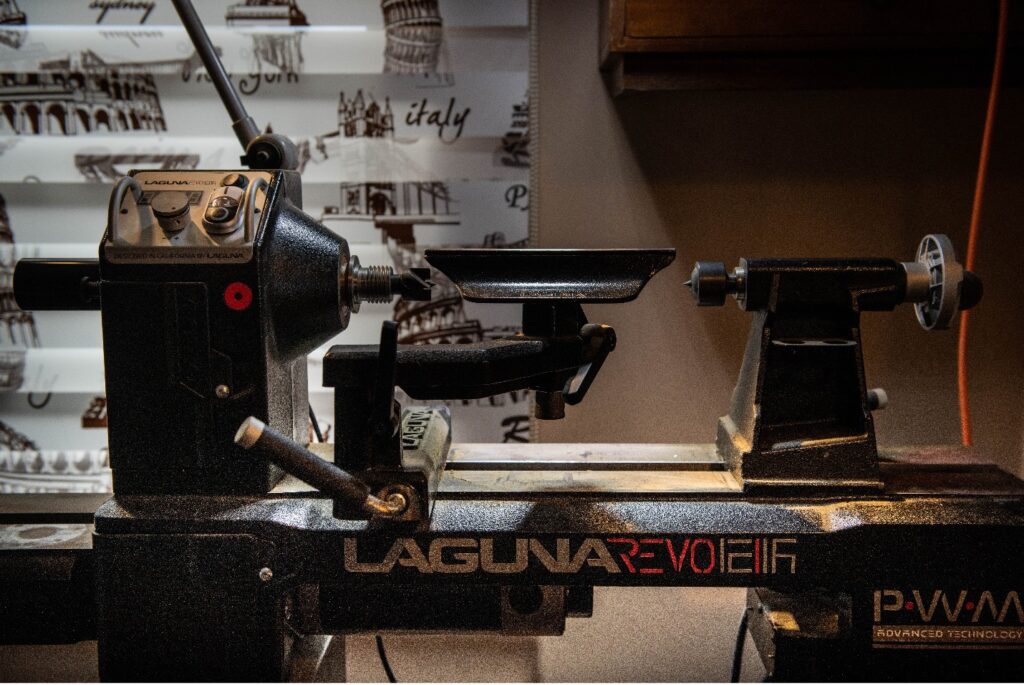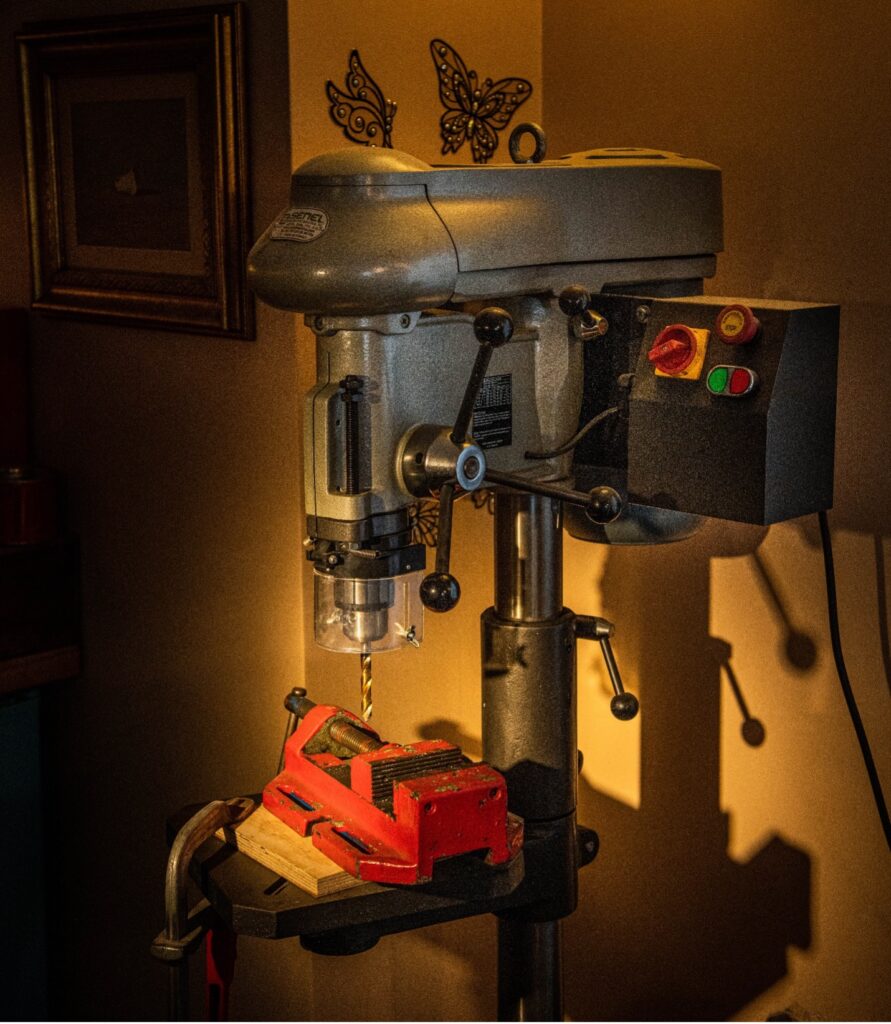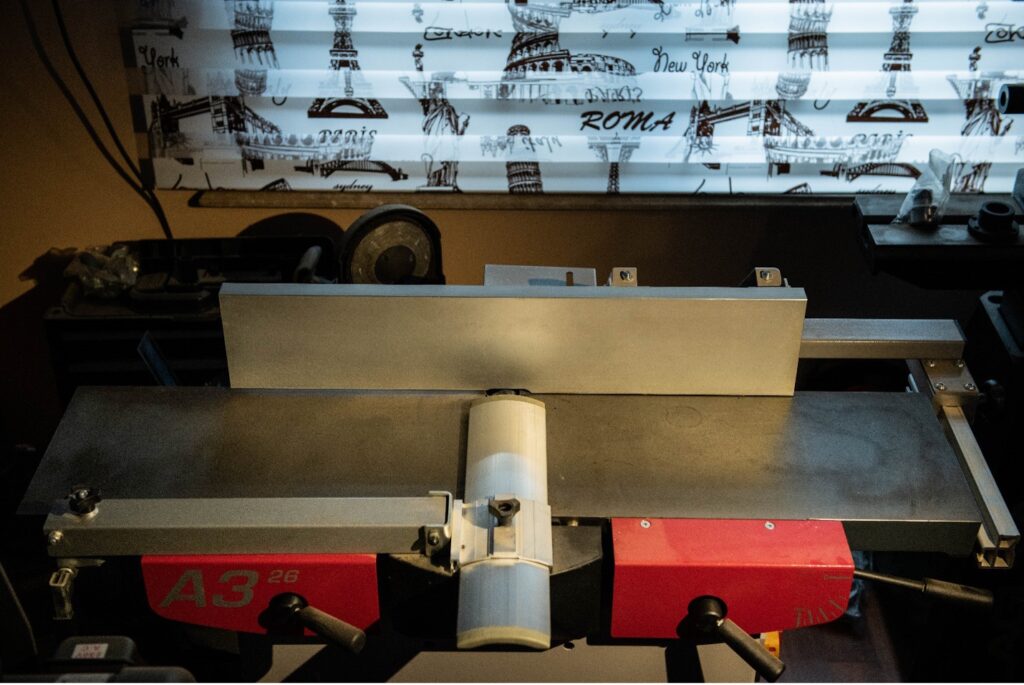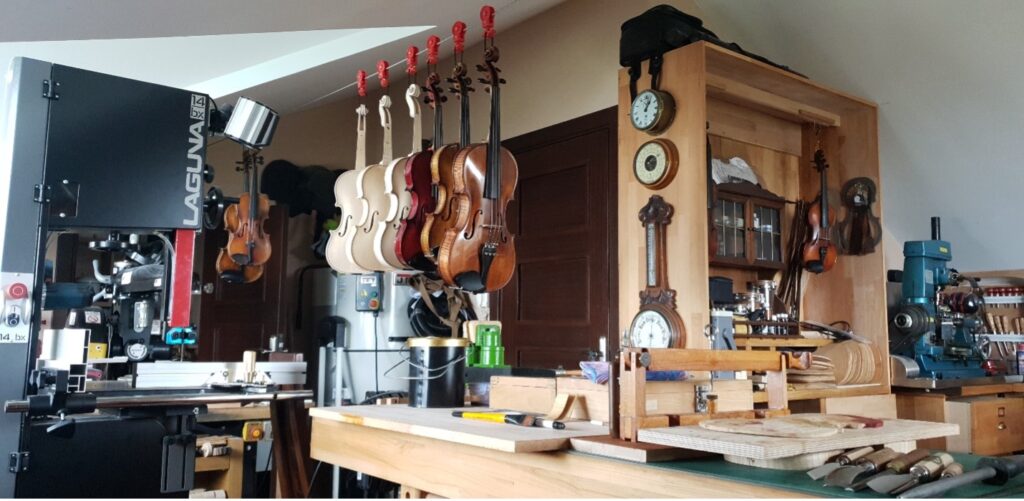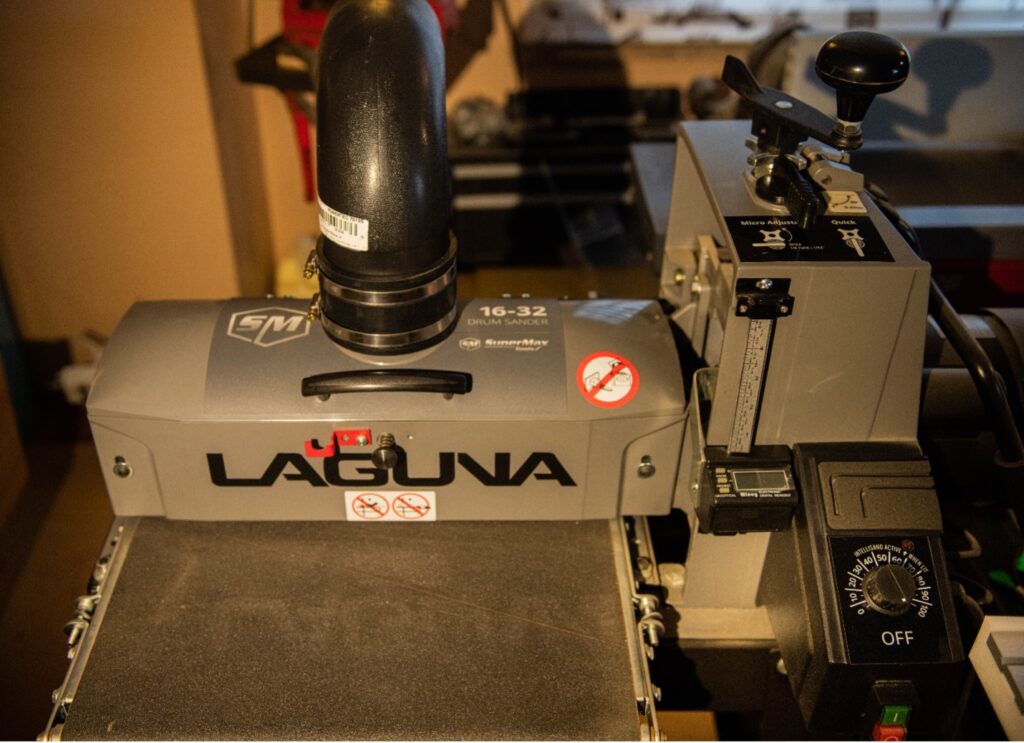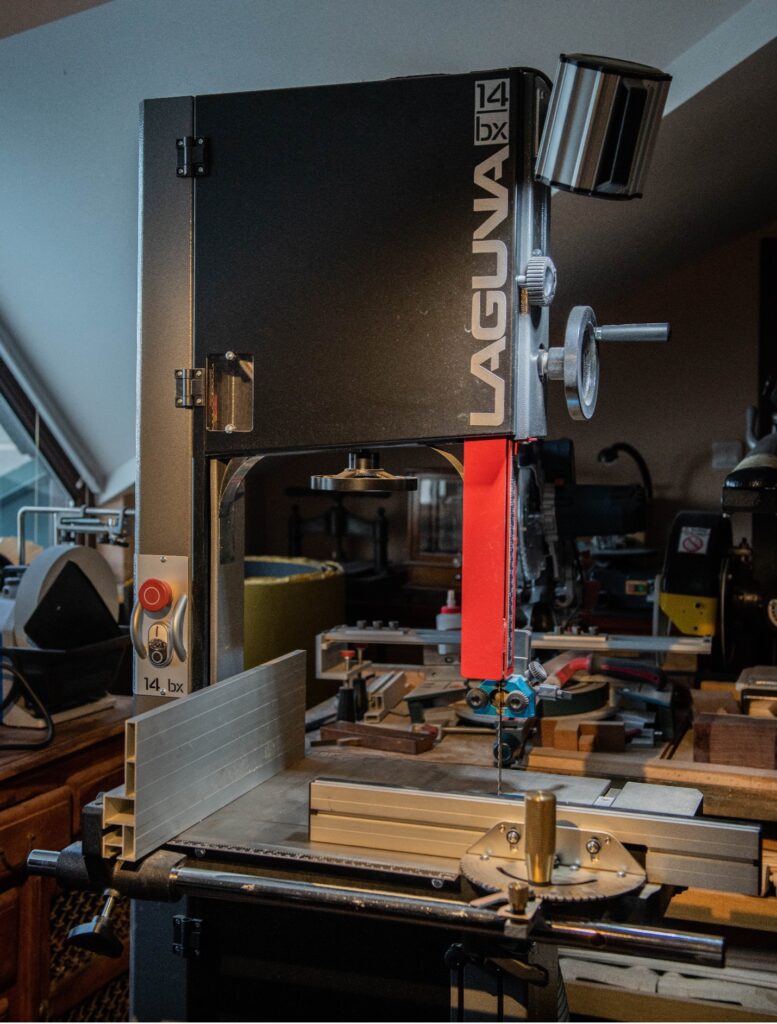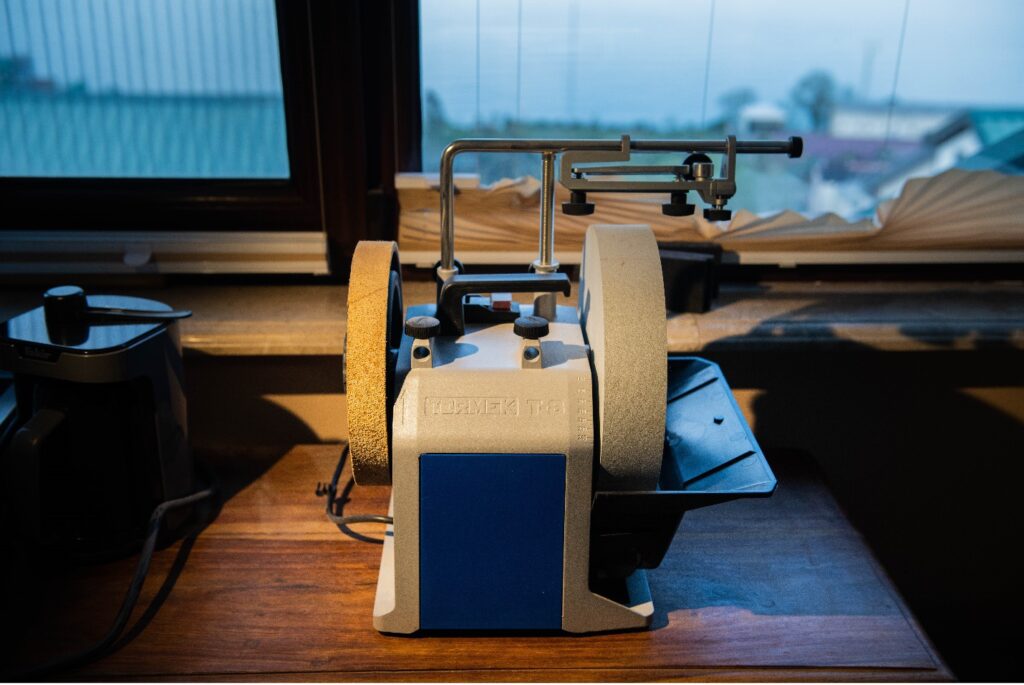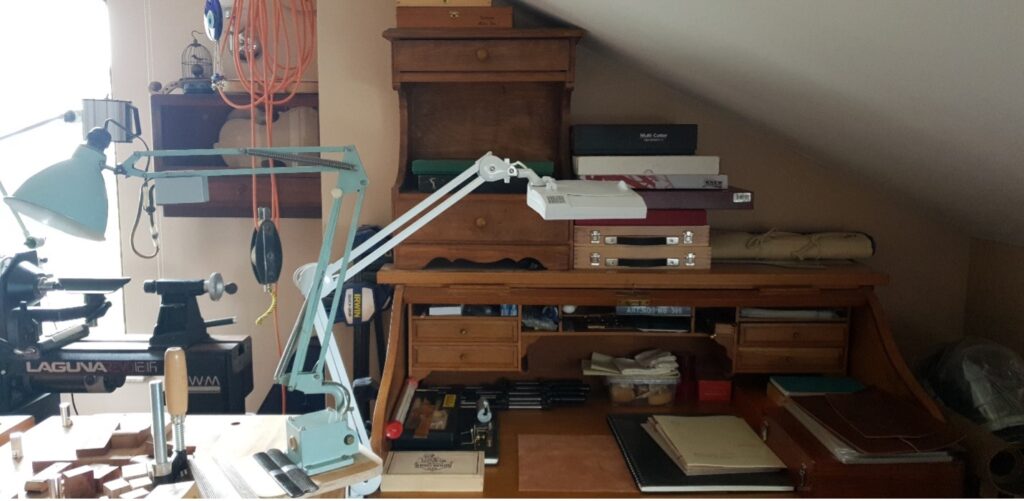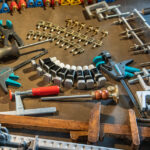

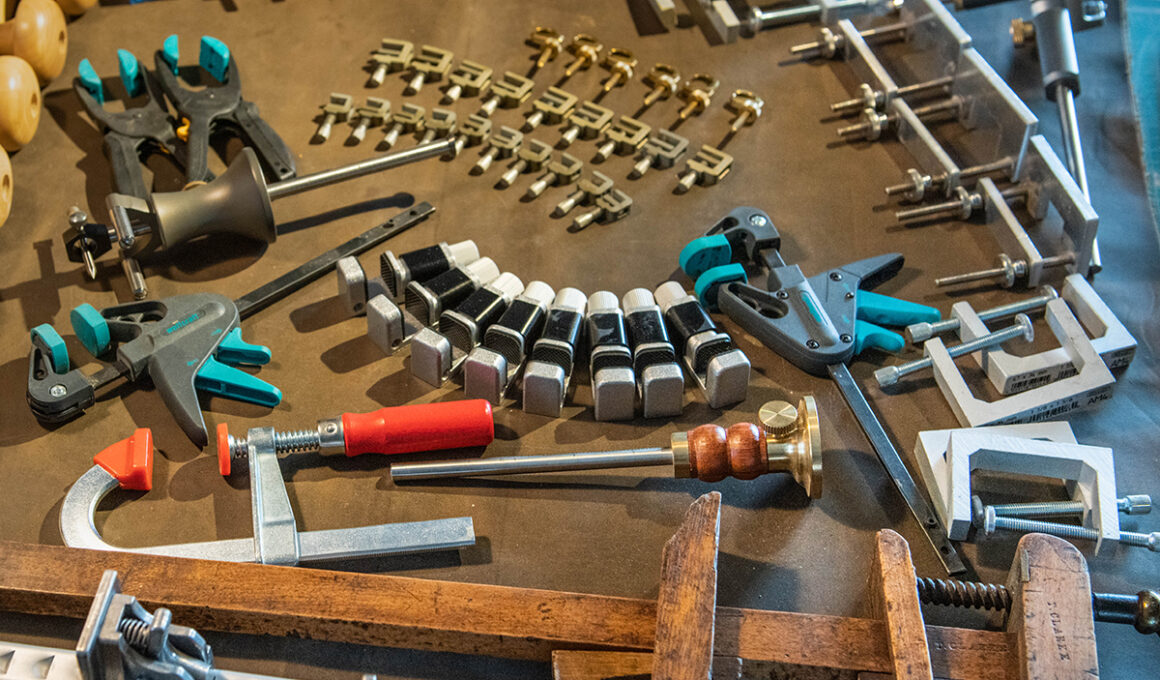
In addition to the usual range of woodworking tools, violin making – in particular – requires a different set of tools and apparatus. These tools are generally as follows:
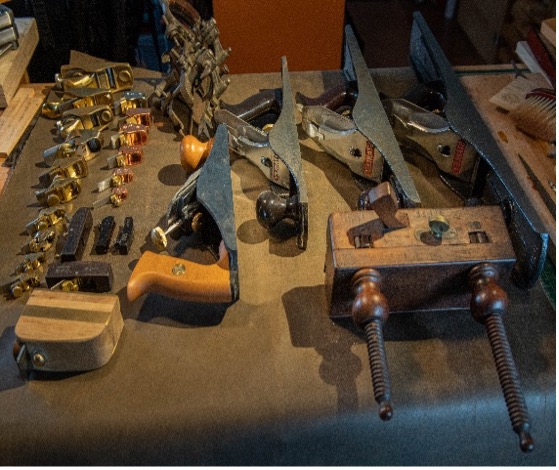
1.Thickness Planers
There is a very wide range of thickness planers used in many stages e.g. planing the joining faces of the front and back plates, trimming the blocks, giving the inner and outer concave and convex curvatures of the front and back covers, etc.
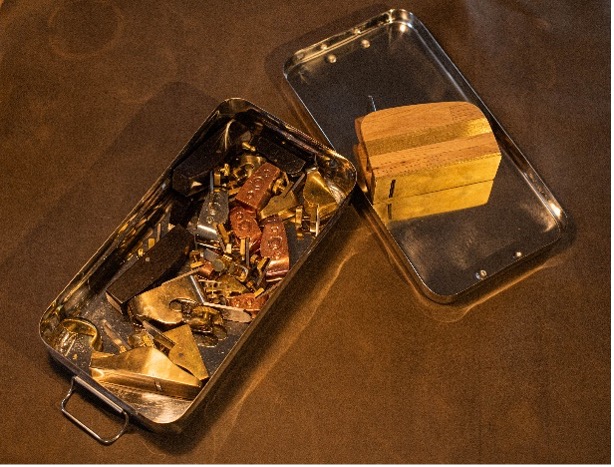
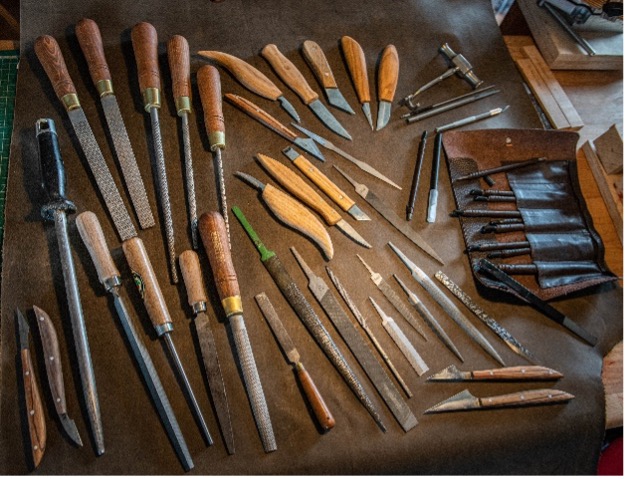
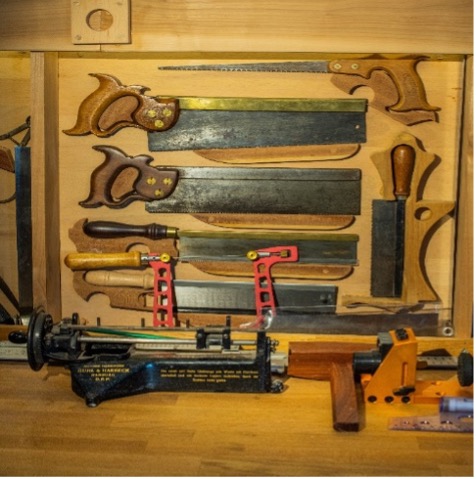
2.Saws and Riffler Groups
There is a wide variety of saws for making front and back cover boards, making handles and snails, creating f holes, etc.
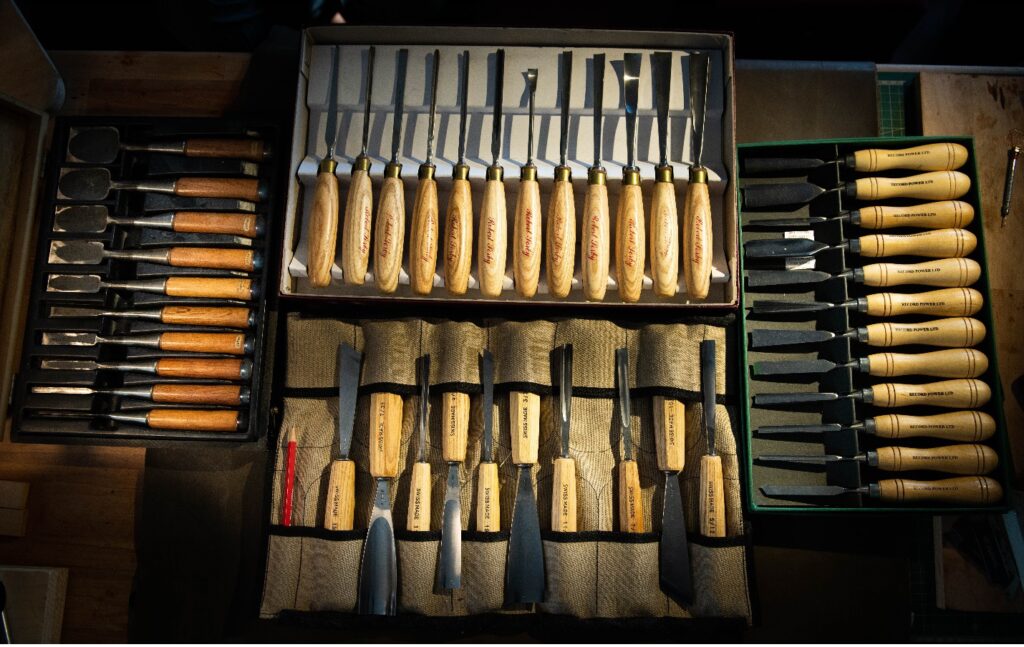
3.Chisels
Various types of chisels are used for carving the covers, making the snail part, trimming the wedges, etc.
4.Dog Wrenches and Clamps
Many different types of dog wrenches and clamps are used in both new violin making and restoration works.
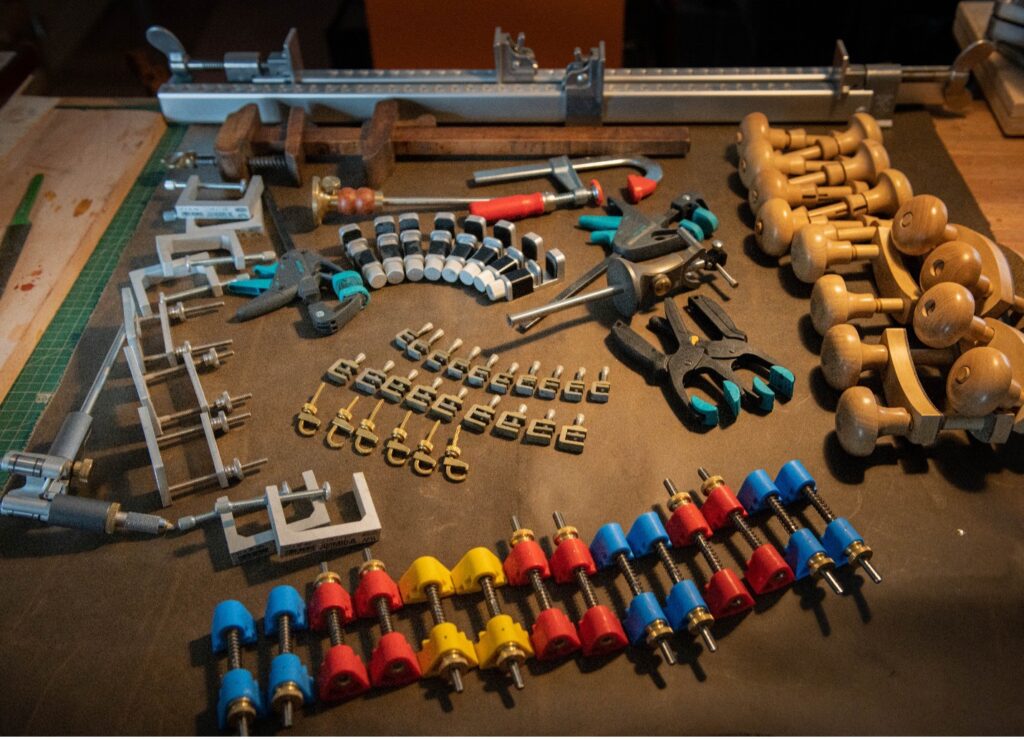
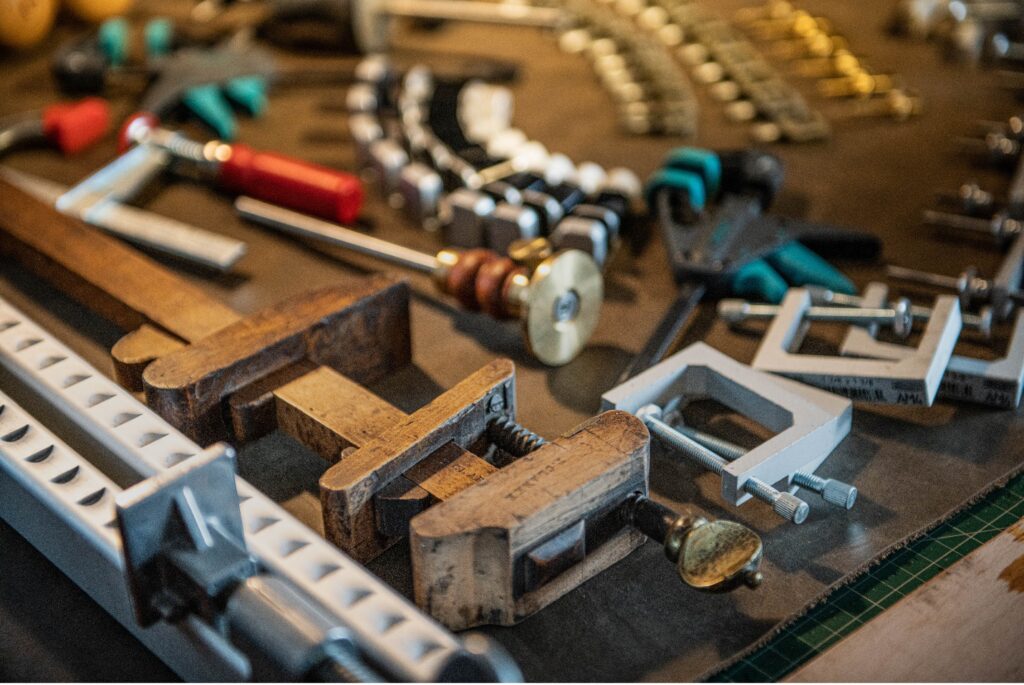
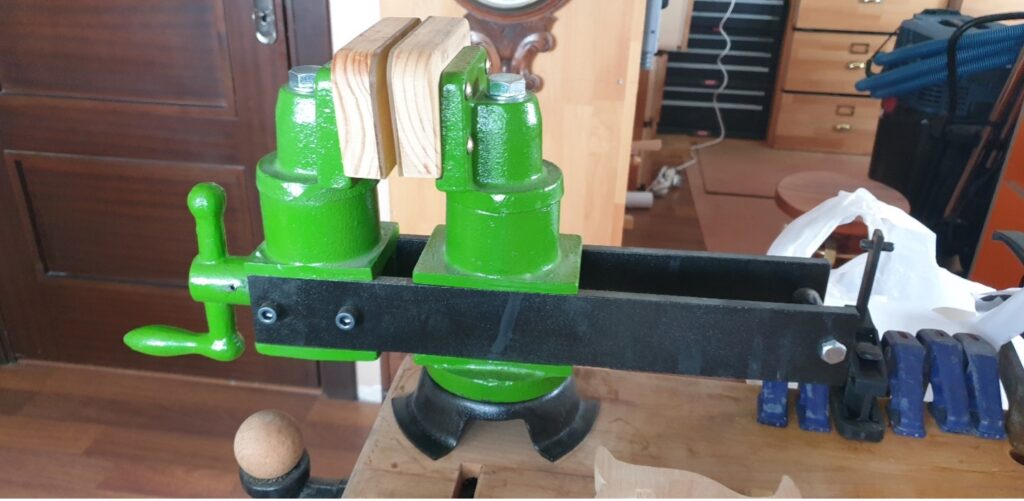
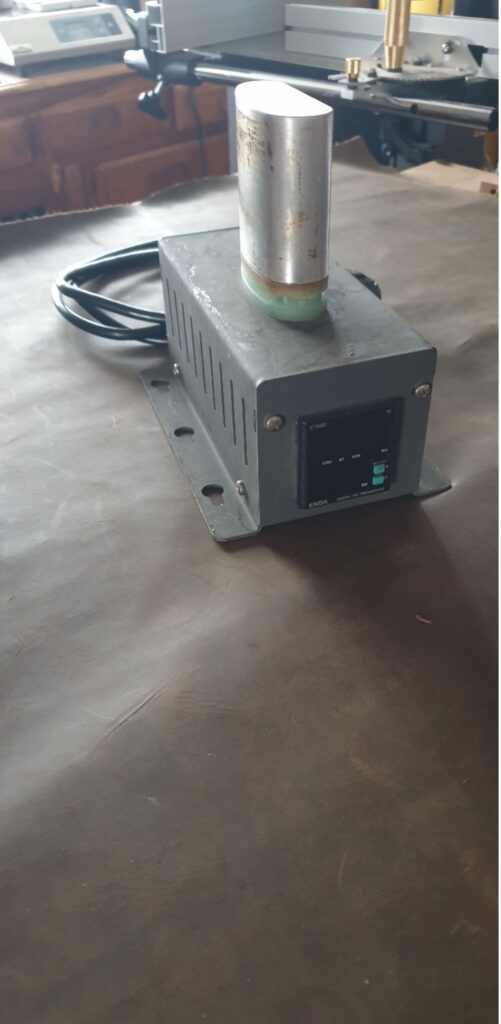
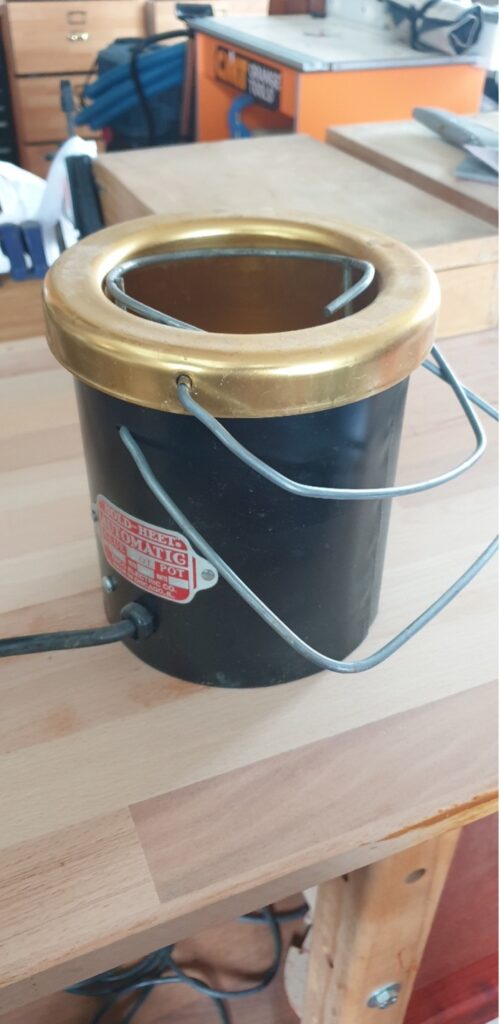
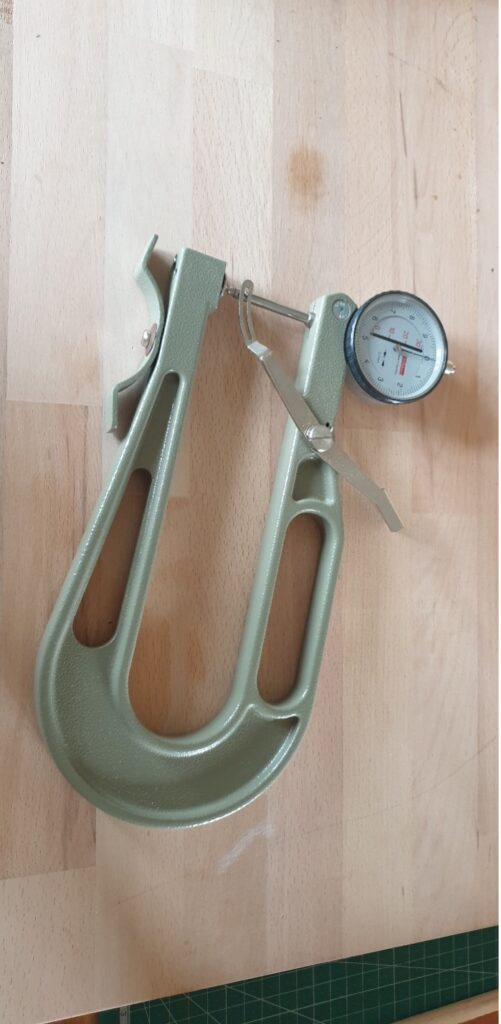
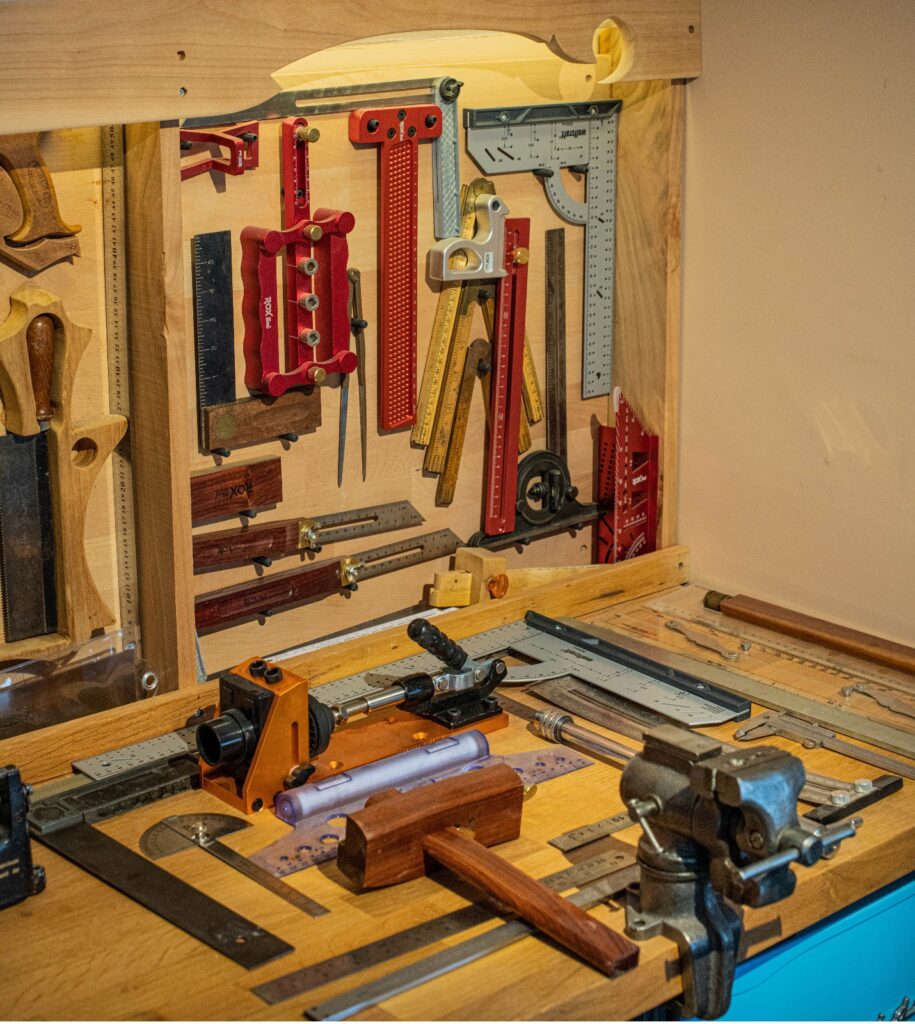
5.Measuring Instruments, Thickness Caliper, Iron and Glue Boiler
Many different and varied instruments are used to measure different thicknesses and depths at each stage of the construction of the instrument.
6.Reamers and Shapers
Various shapers and reamers are used both in the finishing the violin making work and in the parts related to the auger and the drilling of the holes of the violin.
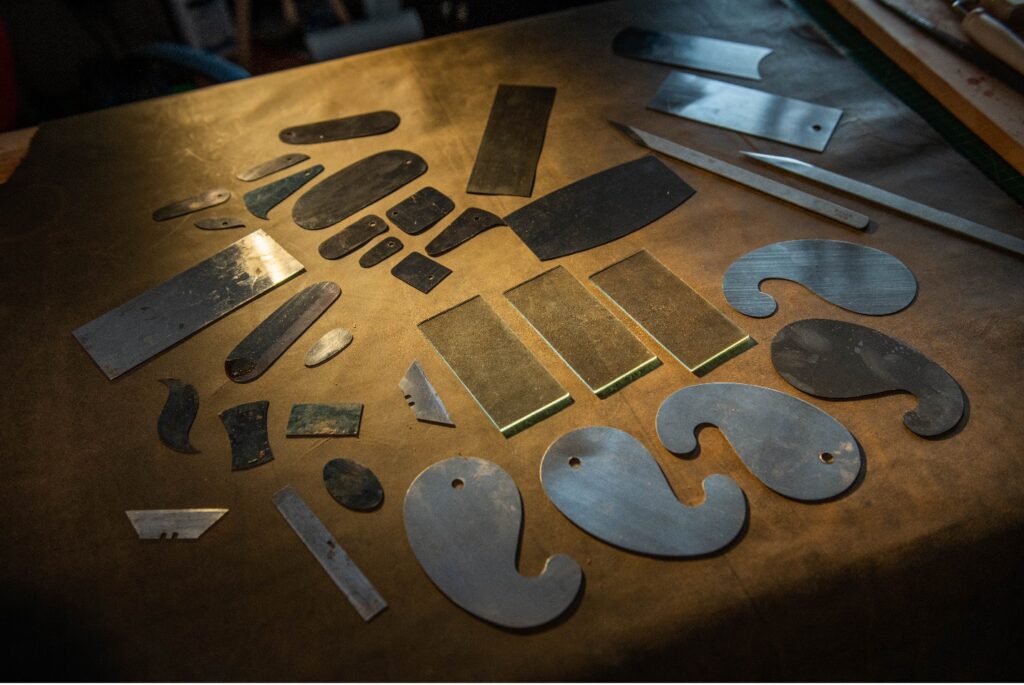
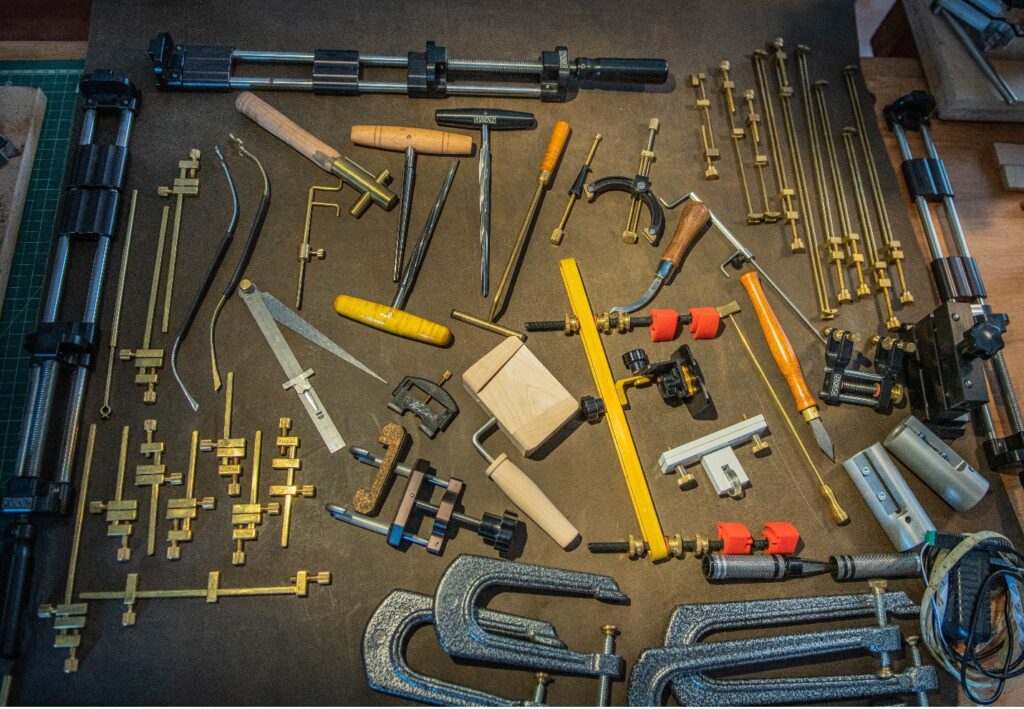
7.Bending Tools, Scrapers, Etching and F-Hole Tools, Soundpost Tools, Molds and Other Tools
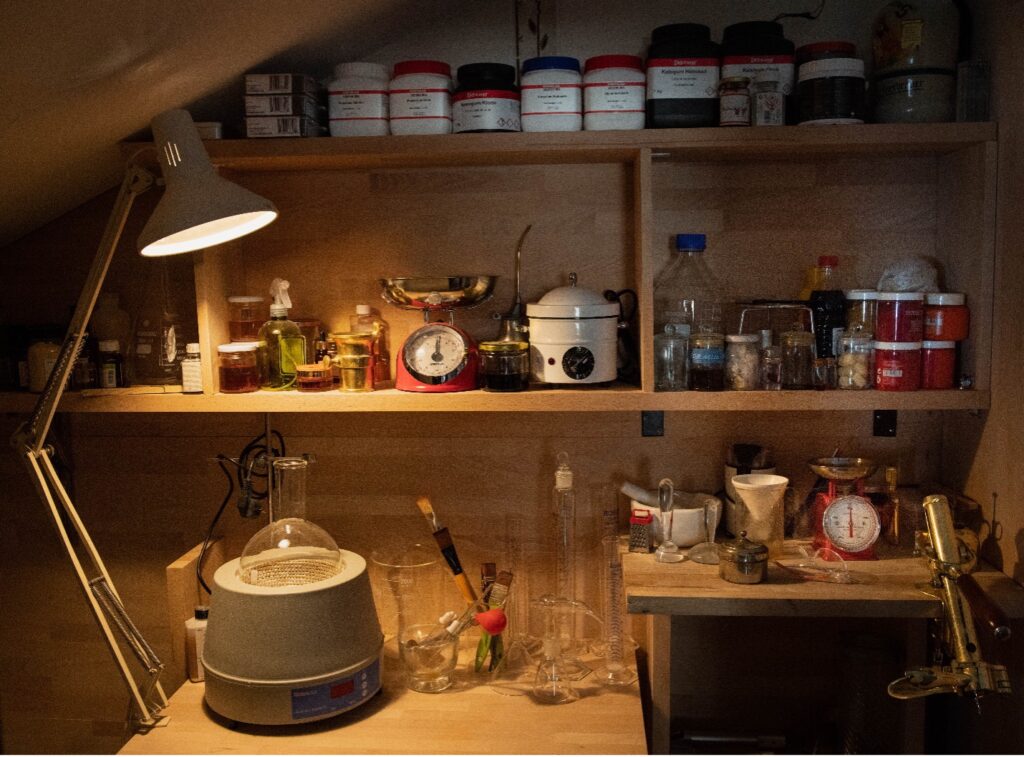
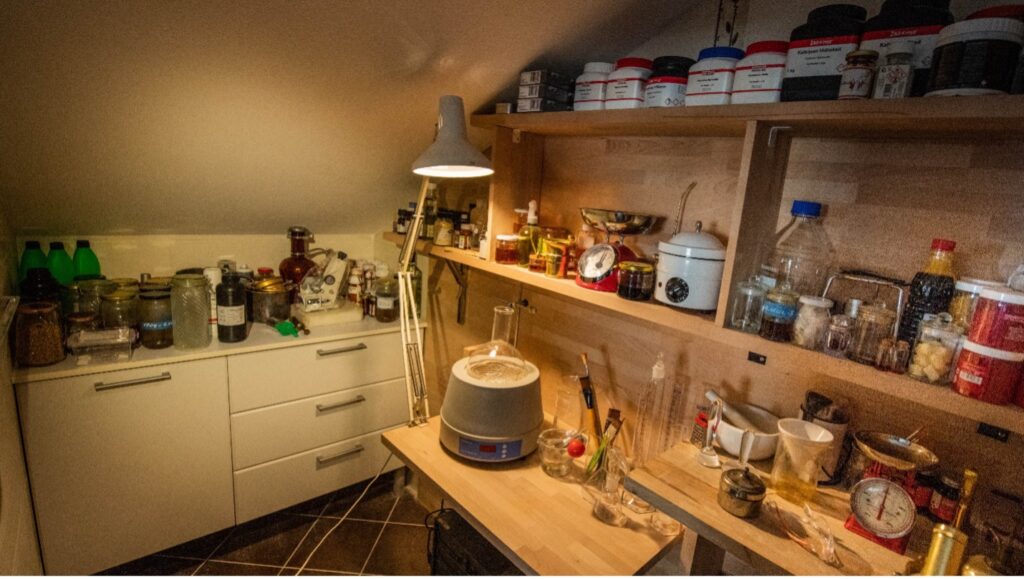
An elaborate varnish workshop is also needed in a stringed instrument making workshop along with bending tools, scrapers, soundpost making and tooling apparatus, molds, wood lathe used for providing torsion, various types of sanding tools and machines used for scraping, planing strip, sharpening stone, various wood rifflers and many machines and tools.