


Choosing the right type of wood is one of the key challenges for a musical instrument manufacturer. There is a wide variety of instruments in the world. These are classified as percussion, clavier, wind instruments, etc. The violin is the most prominent member of the string family and is referred to be the orchestra’s maestro instrument.
String instruments such as the violin originate from Central Asian nomadic culture. Kopuz can be referred to as the first instrument of such type. Through the Silk Road, these stringed instruments were transported from Central Asia to China, India, and eventually the Middle East. Then, these instruments underwent many changes. The violin we know today first emerged in 14th century northern Italy. The Renaissance gave impetus to the first violin makers, and violin making spread to Europe. Stringed instruments known as Rebec, Fer, Lira, Braci, Viel, are the ancestors of the violin. According to certain sources (Lavignac), the word “violin” was derived from the word ‘Kemençe’i Guz’ (Oghuz Violin), while other sources indicate that it was derived from the ‘Rebab’, an instrument with Arabic origins. The renowned violinmakers; Giuseppe Guarneri, Antonio Stradivarius, Paolo Maggini, and Nicolo Amati put their finishing touches on the violin in the 16th and 17th centuries. As the name String Instruments suggests, all of them are played with a bow called Fiddle Bow. Horsehair is still used to make all stringed instruments today. However polyester is also another option thanks to technology. As a natural material, horsehair has an indisputable function in terms of resonance.
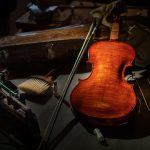
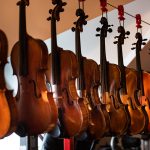
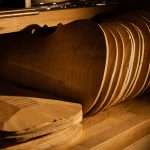
The violin experienced some alterations in the 19th century, albeit preserving its basic lines. Today’s violins have a longer body and handle, a higher bridge, and four strings that are sol, re, la, and mi that run from low to high pitches. Structurally, the back of the violin and the violin family is made of maple, and the chest is made of spruce.
There are two very crucial aspects to selecting violin wood. First of these is Acoustic, and the second is artistic aesthetic. The harmony of the wood patterns on the violin’s body, which are skillfully handled aesthetically using natural oil or alcohol-based varnishes, is what gives the instrument its artistic aesthetic appearance. The integration of the acoustic harmonies of the Tap, Wood, and Rub tones in the frequency scale ranges of all wooden violin-making components within the integrity of the instrument results in acoustic aesthetic.
The matters we have attempted to briefly explain above related to wood constitute a hierarchy of accumulation, experience and mastery gained as a result of years of quite complex research, experimentation and manufacturing that have a completely scientific basis in themselves.
The main purpose of our articles on our website is to transfer our existing knowledge step by step to the new generation producers, thus to humbly illuminate this eternal melody path, and to leave a publication for future generations in the contemporary world.
I hope that we resound elegantly in this dome.
My kind regards to all past and living violin makers and violin fellows,
May 4th, 1993, Trabzon, Uluer VARDALOĞLU


